
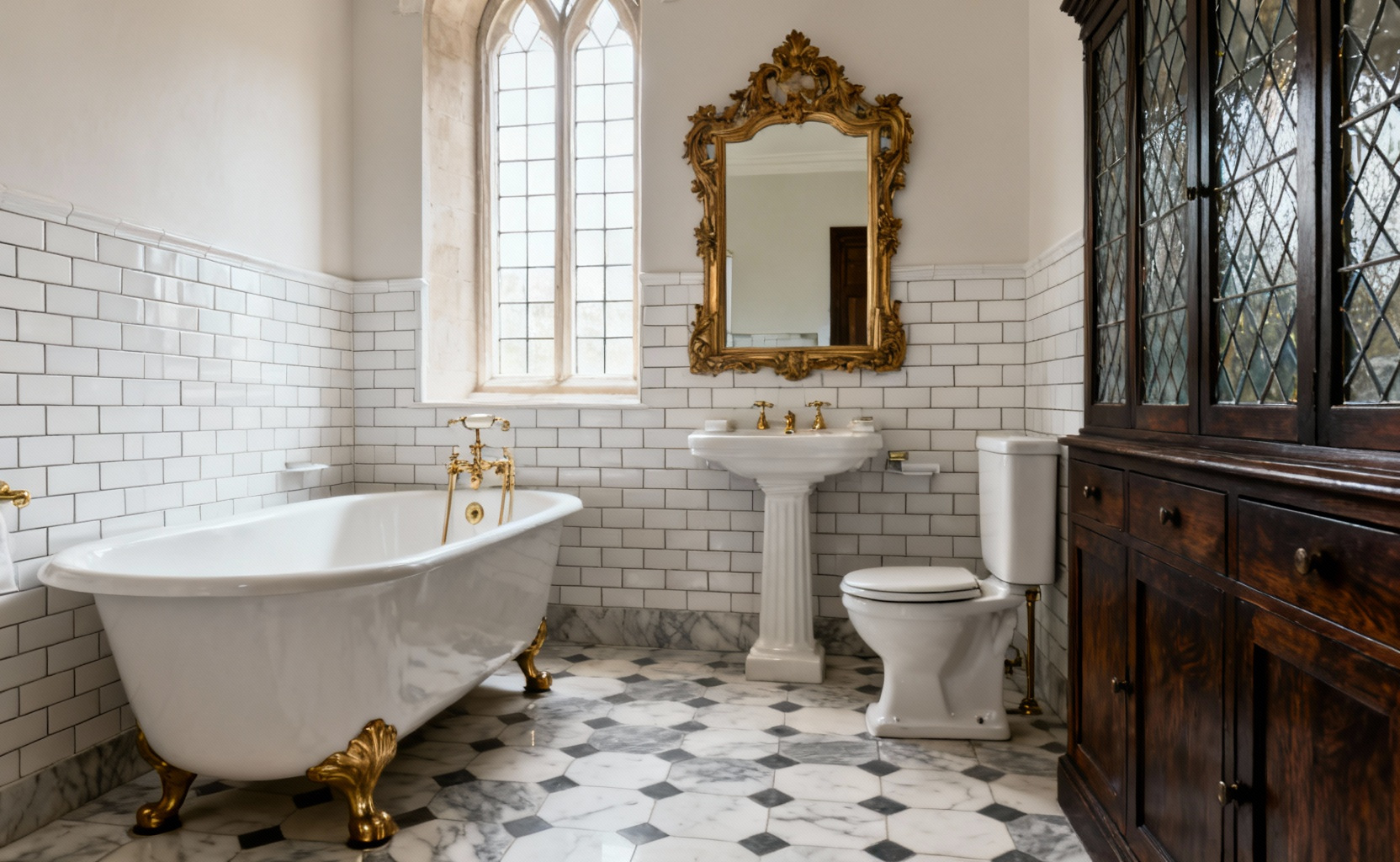

For generations, people who truly love their homes have understood a simple truth: real style isn’t about chasing what’s new, but about honoring what’s timeless. This wisdom, passed down through homes with history, now offers us a blueprint for creating spaces that feel soulful and lasting. We’re about to step into the principles that transform a functional room into a sanctuary for a traditional bathroom remodel. These aren’t just decorating tips; they are the secrets to crafting a space that whispers of quality, honors history, and is built to be cherished for years to come.
Our path starts by understanding the very soul of the design—its heritage. We’ll then explore how honest, enduring materials like stone and brass can tell their own tactile stories. From there, we’ll see how to arrange these beautiful elements in a way that just works for modern life. And finally, we’ll uncover how to blend the best of today’s comforts with the grace of the past, often by giving forgotten original pieces a brilliant second act.
Think of these 20 principles as a friendly guide to creating a bathroom that doesn’t just look traditional but feels like a piece of living history, beautifully reimagined for you.
Cultivating the Genesis of Grandeur: Core Principles for a Heritage Revival (Part 1)
Before a single tile is chosen, we must start with the spirit of the space. This is about laying a foundation of respect for the home’s history and a commitment to quality. Here, we delve into the philosophies that ensure a bathroom feels authentic, well-crafted, and truly timeless.
1. Embracing Historical Authenticity in Your Home’s Story
The first step in any truly great traditional bathroom remodel is to simply listen to the story your house is already telling. It’s less about picking an era you like and more about working with the home’s original character. An Arts and Crafts bungalow whispers of honest woodwork and simple forms, while a Victorian grand dame calls for a bit more flourish. Pastiche—a jumble of mismatched historical ideas—is our greatest enemy.
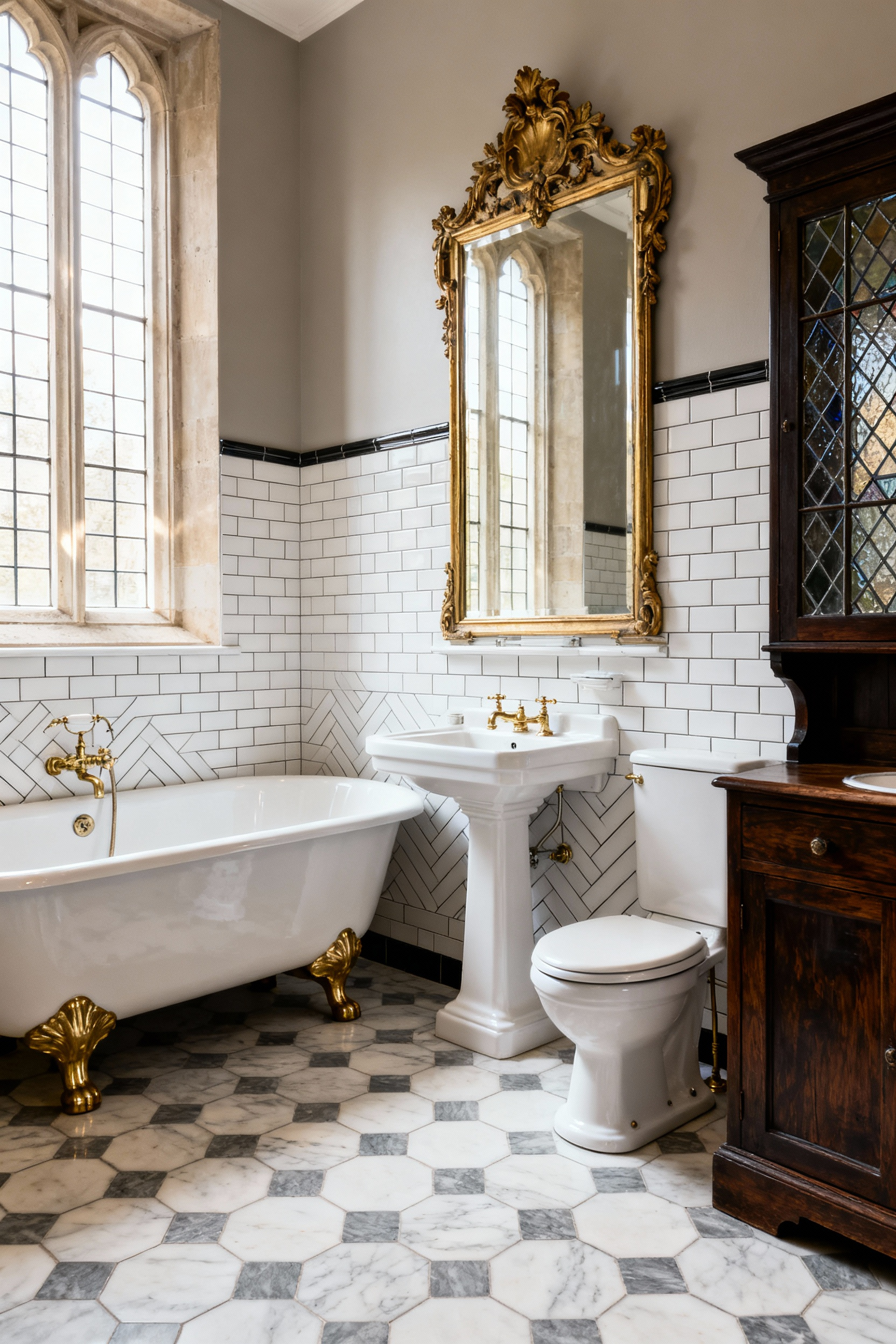
Instead, the goal is to make the bathroom feel like it was always meant to be there. Researching the materials and layouts common to your home’s period gives you an incredible head start. This thoughtful approach ensures you’re not just redecorating; you’re restoring a piece of your home’s soul, creating a space that feels deeply and wonderfully rooted.
2. Deciphering Period-Specific Details for a Personal Touch
Once you understand the big picture of your home’s era, it’s time for the fun part: the details. Think of these as the room’s jewelry. A specific tile pattern, the profile of a wood panel, or the finish on a faucet can instantly signal a particular time and place. These are the elements that give a bathroom its unique character.
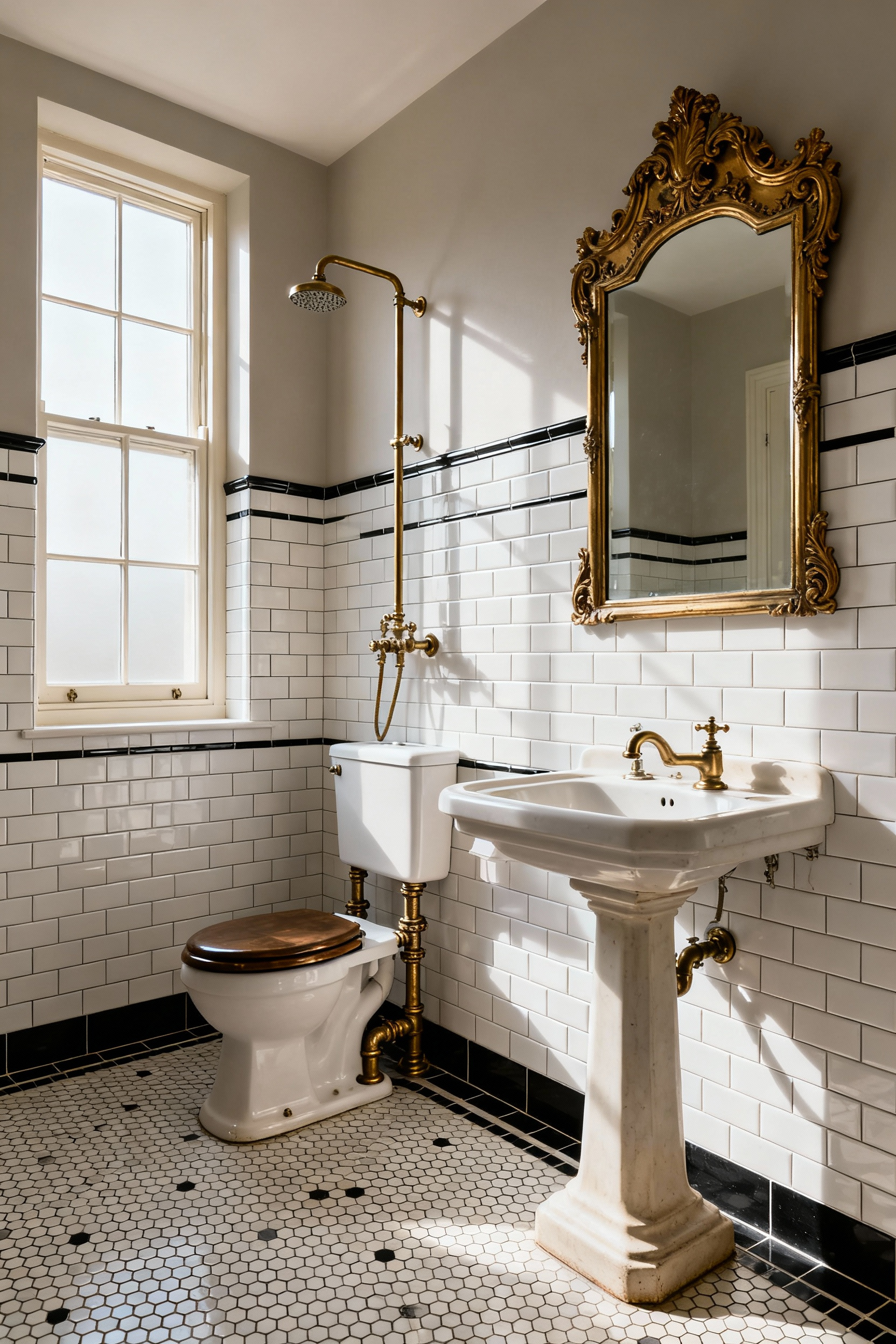
It’s in these small choices that a space moves from generic “old-fashioned” to something truly special. Is it the warm, living finish of unlacquered brass for an Edwardian feel, or the sturdy, simple charm of beadboard for a cottage look? Spatially, these details must feel balanced. A grand, ornate mirror might overwhelm a small powder room, but in a primary bath with high ceilings, it can be a stunning focal point. In my work with sustainable upcycling, I’ve noticed it’s these authentic, small details that hold the most power.
3. Prioritizing Longevity and Craftsmanship Over Fleeting Trends
This one is close to my heart. In a world of fast furniture and disposable trends, choosing longevity is a powerful, sustainable act. A traditional bathroom remodel is the perfect place to commit to quality that is meant to last for generations, not just a few seasons.
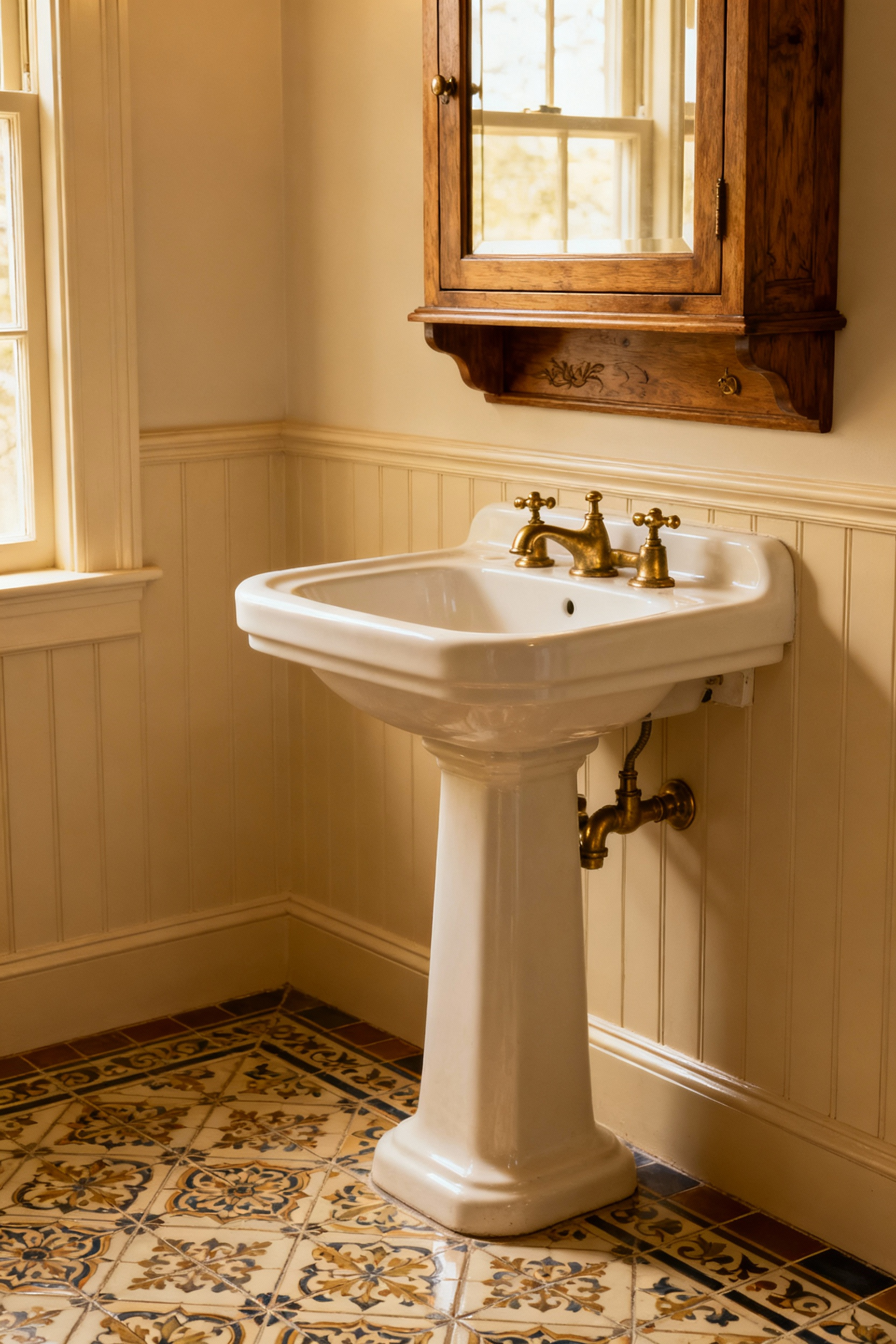
This means looking for solid wood cabinetry with real joinery, faucets made of solid brass that feel heavy in your hand, and tubs of cast iron or porcelain that will outlive us all. This is resourceful luxury at its best—investing in pieces that not only perform beautifully but also age with grace. They’ll gather a patina, the small marks of a life well-lived, and become richer for it.
4. Harmonizing Modern Needs with Classical Grace
Let’s be honest: we want a bathroom that feels timeless, but we also want a shower with great water pressure and a place to charge our phones. The trick is to integrate these modern comforts so discreetly they feel like a natural part of the design, not a clumsy interruption.
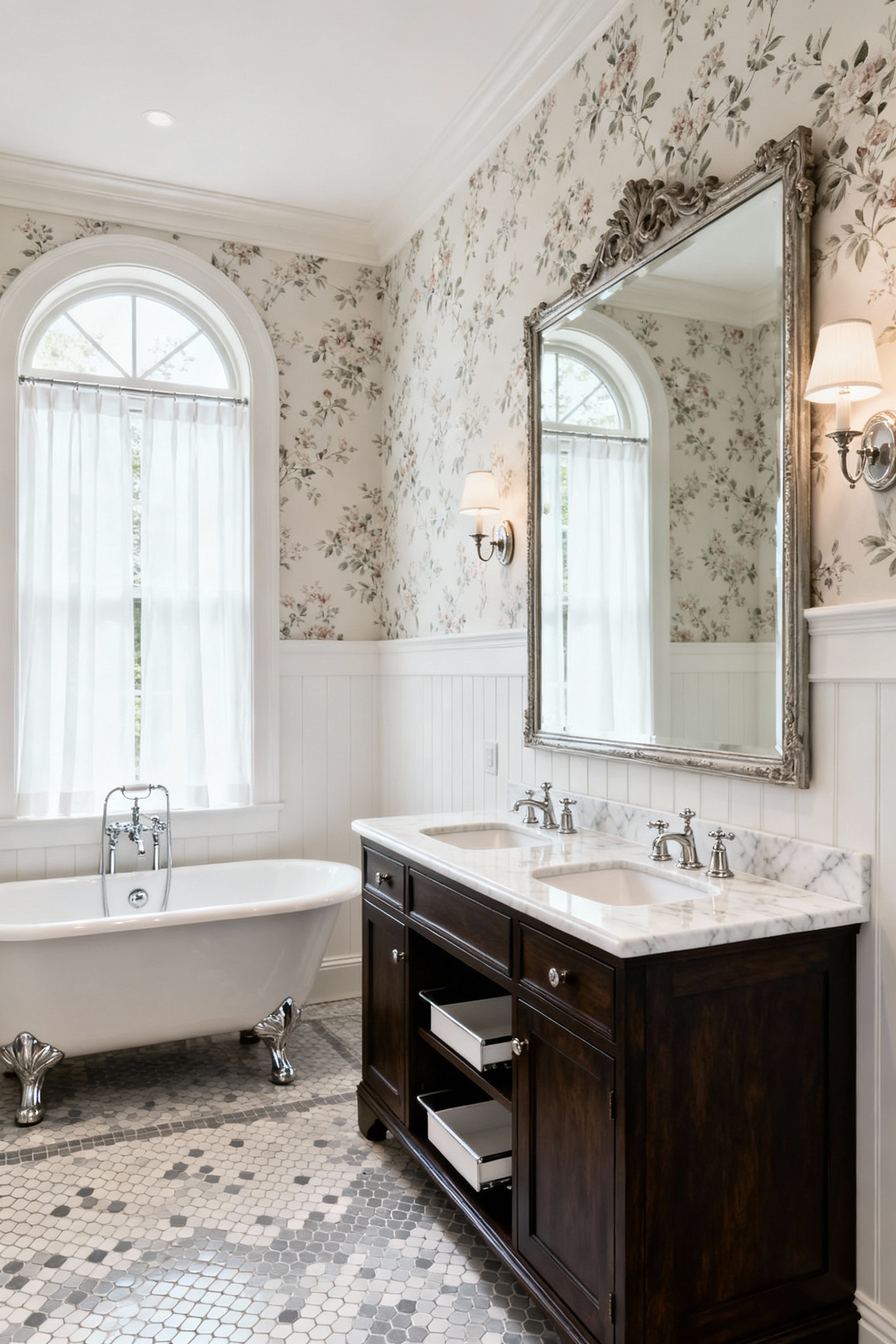
This might mean hiding outlets inside a medicine cabinet, choosing a heated towel rack that has a classic design, or installing a high-tech ventilation fan behind a decorative, period-appropriate grille. Years of mid-century modern restoration have taught me that good design is always about solving problems elegantly. By thoughtfully weaving in today’s conveniences, you create a space that offers the best of both worlds: historic charm and effortless modern living.
Cultivating the Genesis of Grandeur: Core Principles for a Heritage Revival (Part 2)
Authenticity can’t be faked. It comes from a real connection to the past. This section is all about the treasure hunt—sourcing the genuine articles that will give your traditional bathroom remodel an irreplaceable depth and soul.
5. The Joy of the Hunt: Sourcing Antique Fixtures with a Story
Here’s where the magic really happens. A brand-new clawfoot tub can be lovely, but a salvaged one that has been lovingly restored? It has a story. Choosing antique or vintage fixtures is the single best way to give your traditional bathroom remodel an immediate sense of history and soul. I always get a thrill from this part of the process.
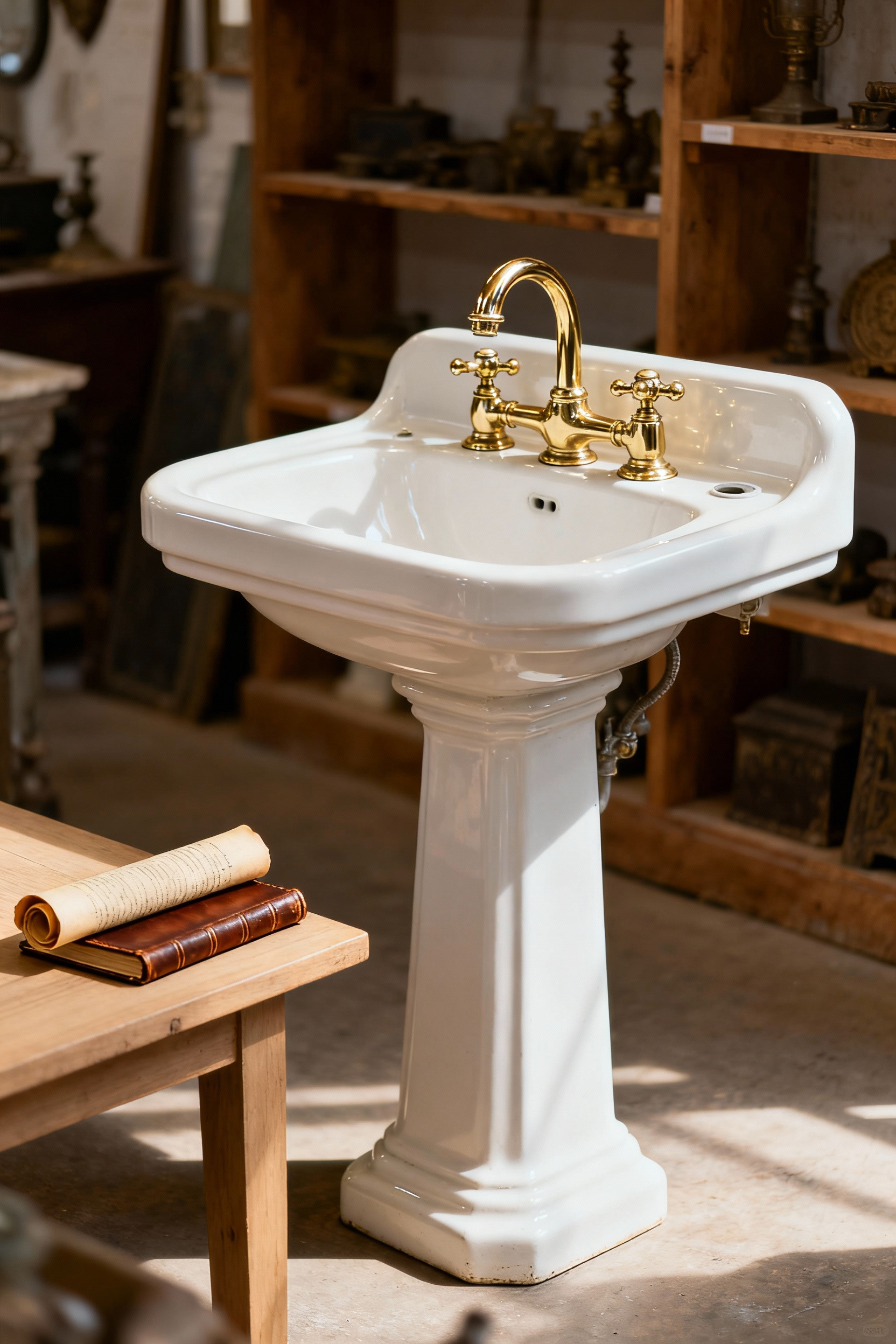
Look for a marble-topped washstand you can convert into a vanity, a set of porcelain taps from a salvage yard, or a cast-iron tub with its original maker’s mark. These pieces have a weight and presence that can’t be replicated. They anchor the entire room in authenticity and become a daily reminder that you chose to preserve a piece of the past instead of simply buying new. It’s the most beautiful form of recycling I can imagine.
Curating Tactile Narratives: Elevating Spaces with Enduring Finishes (Part 1)
How a room feels is just as important as how it looks. This is where we talk about the materials that form the backdrop of your sanctuary—the stone, tile, and metal that you’ll interact with every day. Choosing them well is an art in itself.
6. The Poetry of Natural Stone: Marble, Travertine, and More
There’s something incredibly grounding about bringing natural stone into your home. Each piece of marble or travertine is a work of geological art, millions of years in the making. It carries an inherent sense of permanence and luxury that immediately elevates a space.
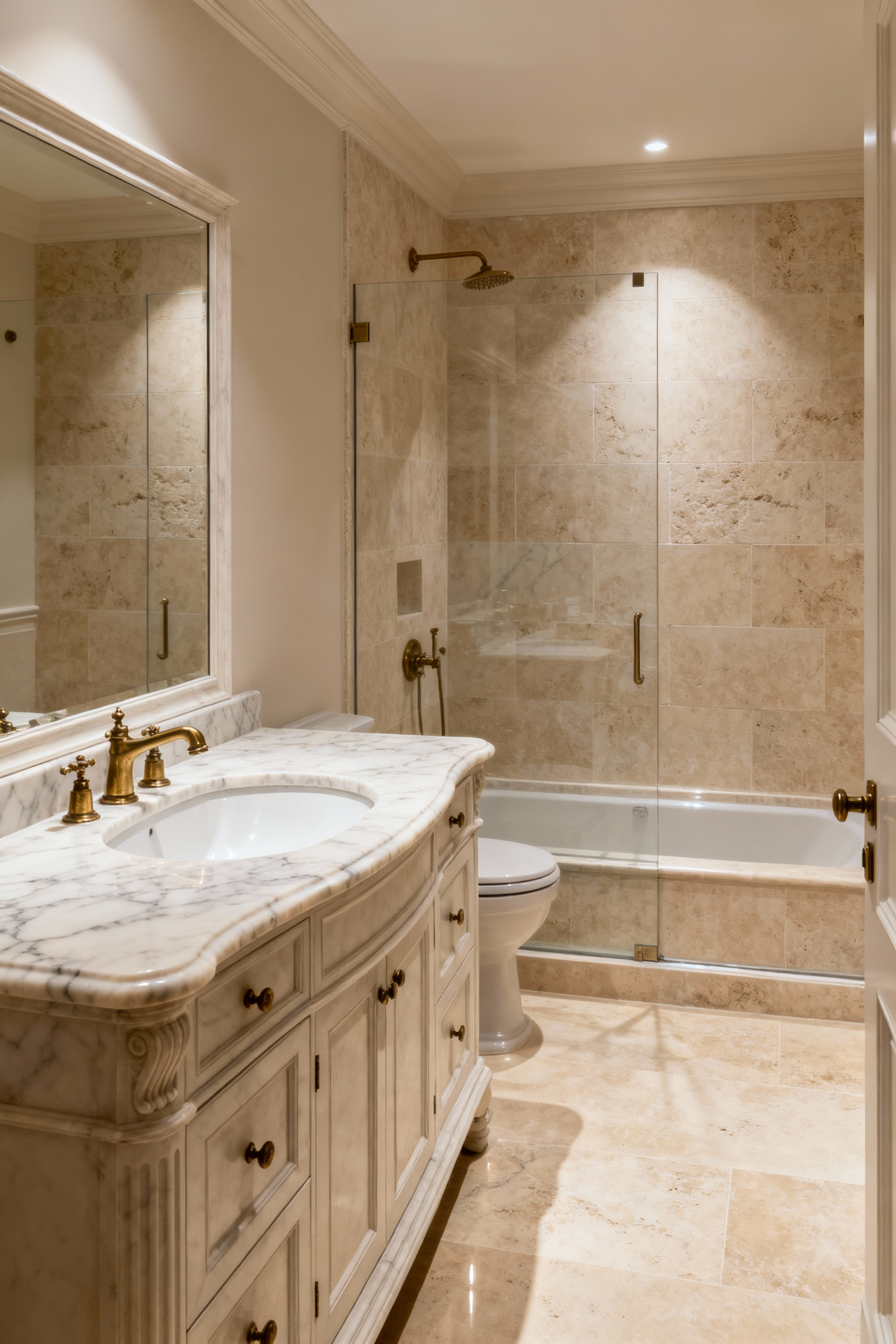
Whether it’s the quiet grace of Carrara marble on a countertop, the warm, earthy feel of travertine on the floor, or the deep drama of soapstone, natural stone offers a beauty that evolves. It will patina and etch over time, recording the story of your daily life. What I tell my readers is that these “imperfections” are what make it truly yours—a surface that gets more beautiful as it lives alongside you.
7. The Legacy in Clay: Choosing Authentic Porcelain and Ceramic Tiles
Tile is the workhorse of the traditional bathroom, but it can also be its most charming feature. From the classic white subway tile that became popular in the early 20th century to intricate mosaic patterns that echo Victorian design, tile offers endless possibilities for historical expression.
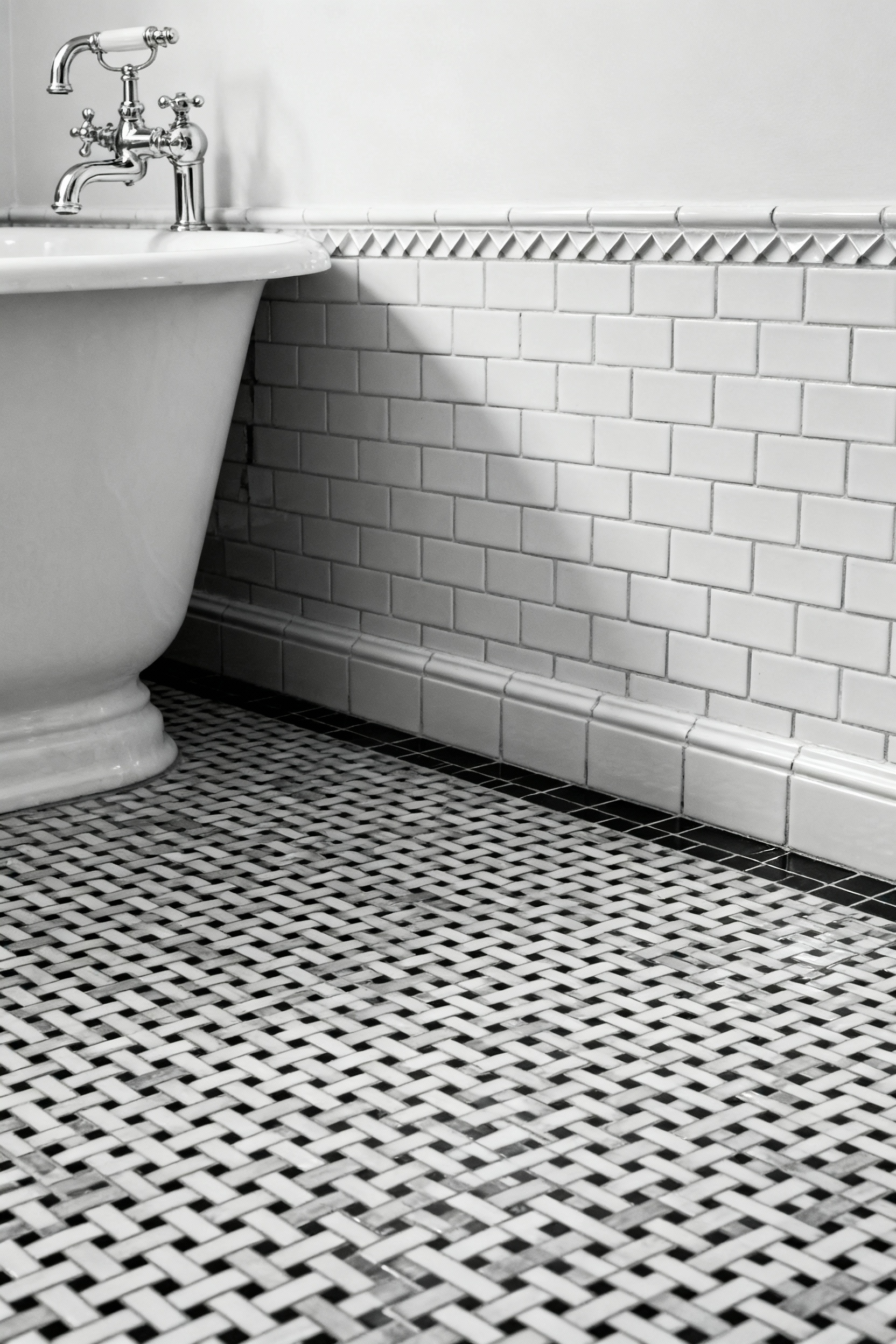
The secret is to look for tiles that have a bit of life to them—perhaps a slightly uneven glaze, a handmade quality, or a soft, crackled finish. These subtle details keep a tiled surface from feeling flat and sterile. Laying them in a classic pattern, like herringbone or a basketweave, further honors tradition and adds a layer of beautiful, durable texture to your room.
8. The Living Finish: Harnessing the Patina of Unlacquered Brass
If there’s one choice that speaks to an appreciation for materials that evolve, it’s unlacquered brass. Unlike its lacquered, perpetually shiny cousins, this “living finish” is meant to age. Straight out of the box, it’s a bright, warm gold. But with time and touch, it deepens to a rich, mellow brown, sometimes with hints of verdigris.
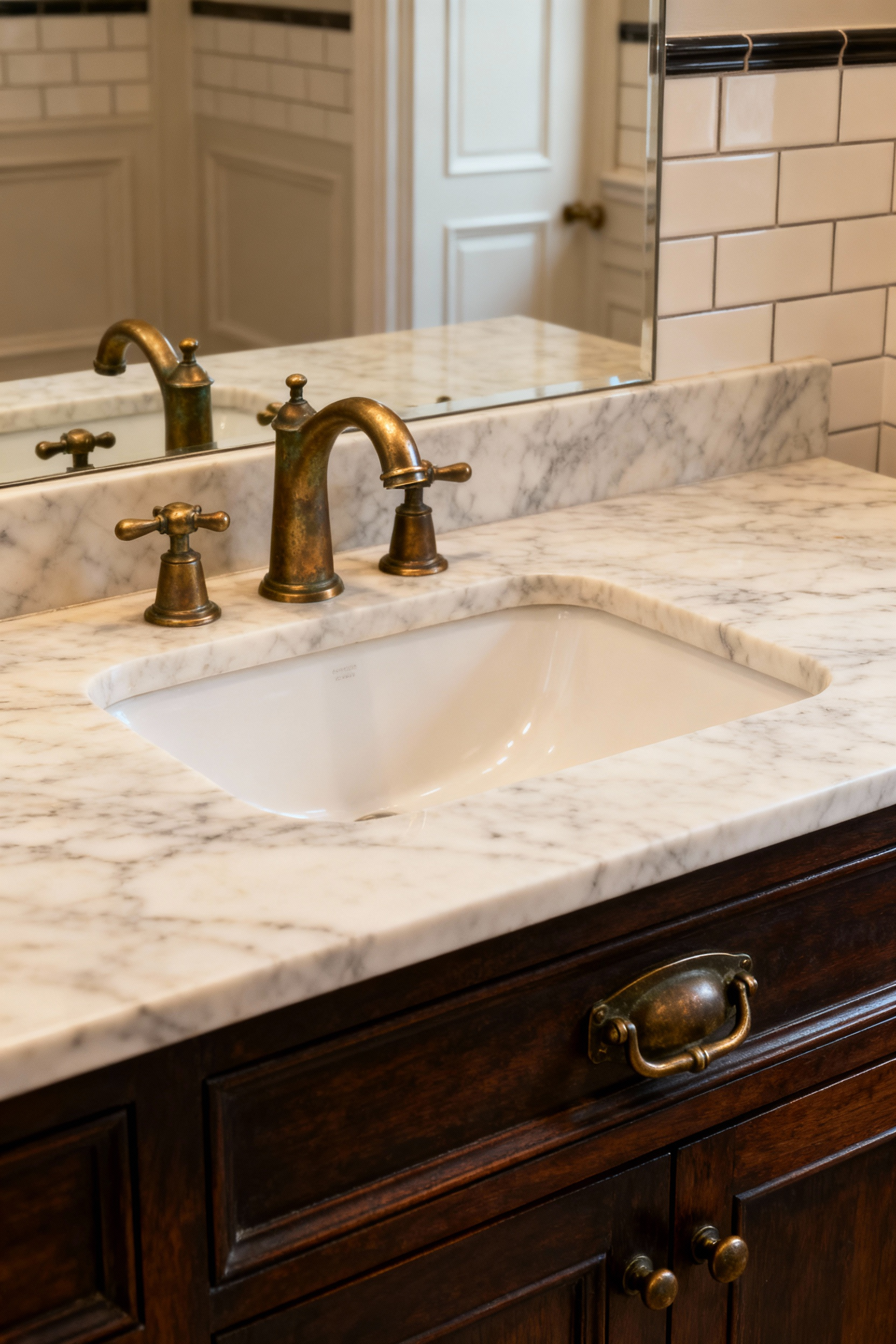
This slow, beautiful transformation is the whole point. Every time you turn the handle, you contribute to its unique story. Choosing unlacquered brass (or aged bronze) for faucets, hardware, and lighting infuses a bathroom with a sense of warmth and history that feels earned, not applied. It’s an embrace of imperfection and a testament to a life being lived.
9. The Architectural Backbone: The Refinement of Millwork
Millwork—things like wainscoting, crown molding, and substantial door trim—is the architectural skeleton of a traditional room. It gives the space definition, rhythm, and a finished, intentional feel. Without it, the walls can feel flat and the room undefined.
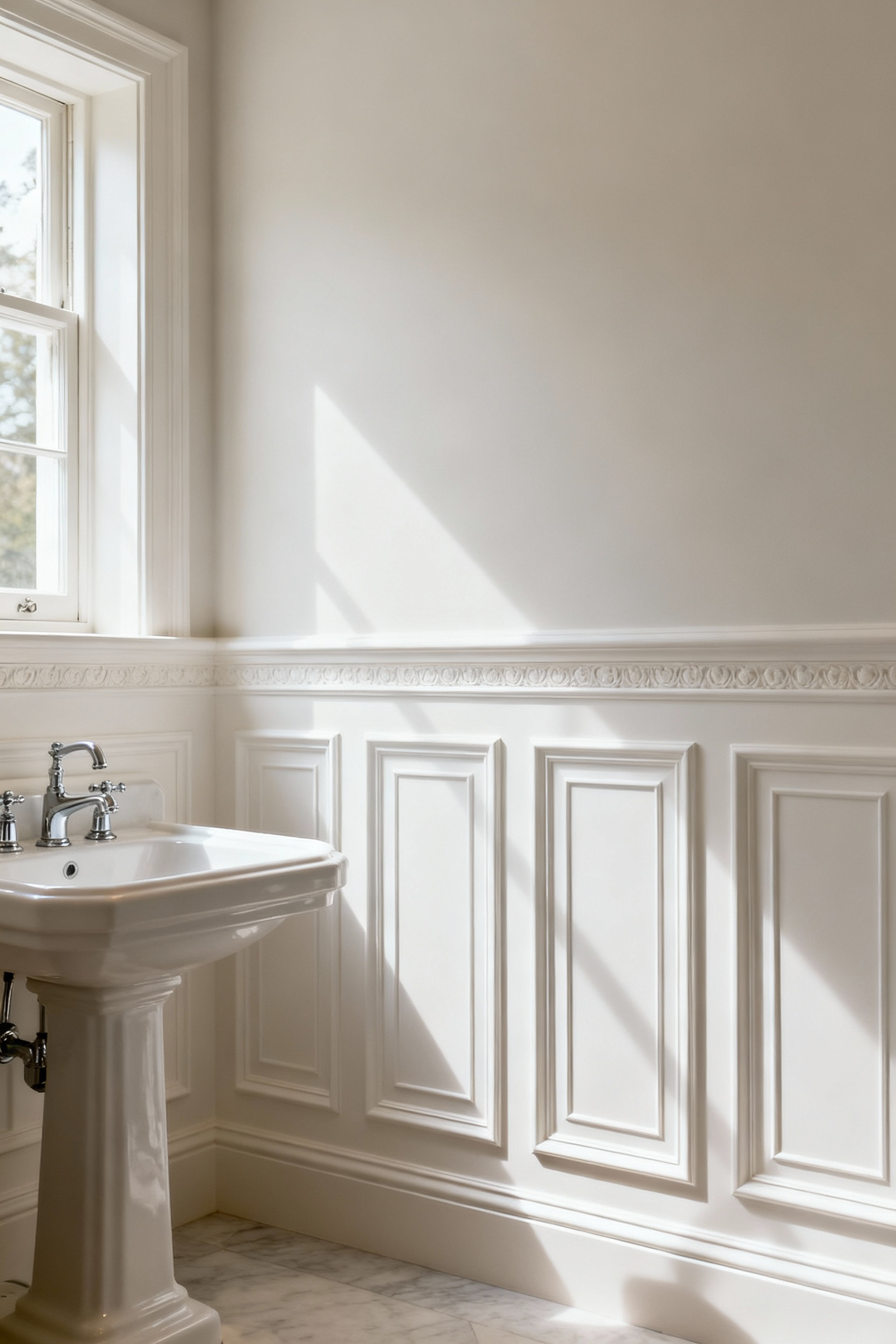
Whether it’s the clean simplicity of Shaker-style panels, the charming vertical lines of beadboard, or the formal elegance of raised panels, millwork grounds the space in its historical context. I’ve seen this play out time and again: taking the time to install quality, period-appropriate millwork is one of the most impactful decisions you can make in a traditional bathroom remodel. It makes the entire room feel more substantial and cohesive.
Curating Tactile Narratives: Elevating Spaces with Enduring Finishes (Part 2)
Function meets art in the pieces we commission and craft for a space. Here, we move beyond surfaces to the substantial elements that serve us daily, turning simple utility into an expression of bespoke elegance.
10. Cabinetry as Furniture: Commissioning Pieces with Craftsmanship
In a truly thoughtful traditional bathroom, the vanity and storage cabinets shouldn’t feel like kitchen leftovers. They should feel like beautiful, freestanding pieces of furniture that just happen to live in the bathroom. This approach completely changes the character of the room.
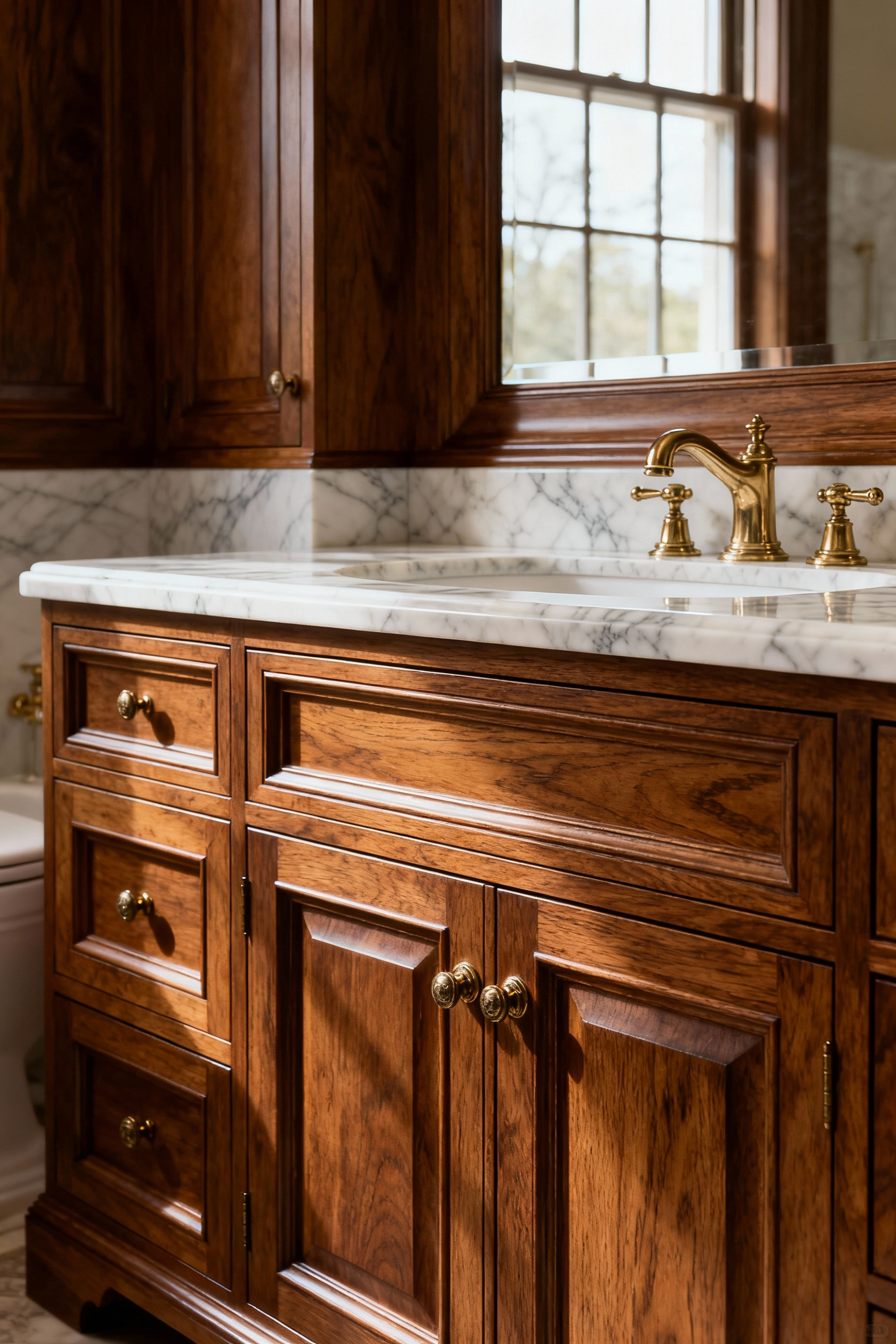
Think of a vanity built like an antique dresser, with shapely legs and dove-tailed drawers, or a tall linen cabinet crafted with the same care as a family heirloom. Using solid woods and classic joinery techniques ensures these pieces will last a lifetime, and they can even be taken with you if you move. It’s an investment in artistry and utility that anchors the room in timeless quality.
Orchestrating Form and Function: Crafting the Traditional Layout with Precision (Part 1)
A beautiful room that doesn’t function well is a design failure. This section is all about the invisible art of layout—arranging the key elements in a way that feels natural, comfortable, and elegant, even in the tightest of spaces.
11. The Art of Flow: Optimizing Ergonomics in a Traditional Layout
Many historic homes have bathrooms with challenging, compact layouts. The key to making them work isn’t about knocking down walls, but about being clever with every single inch. True elegance here comes from a layout that feels intuitive and unforced.
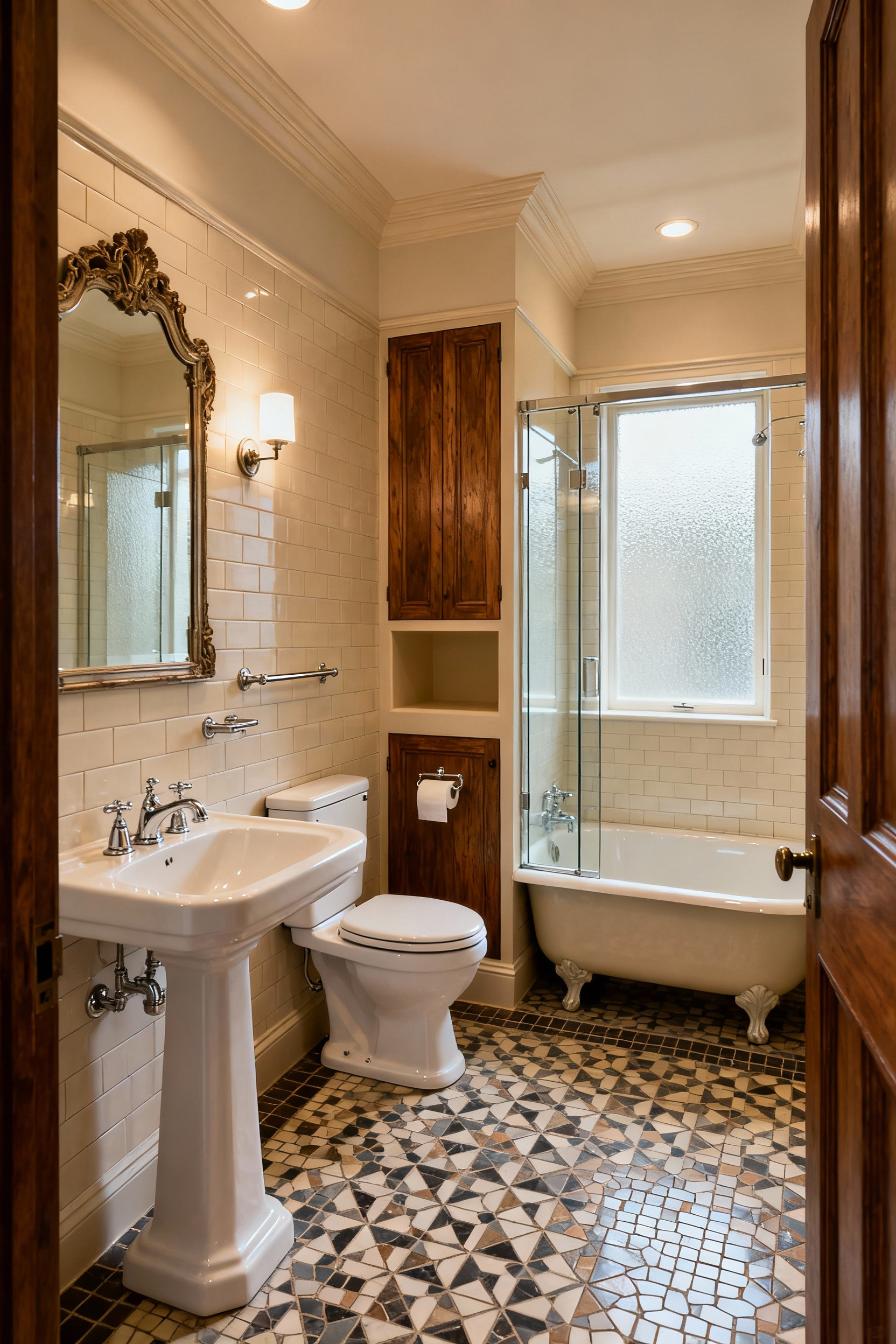
This means ensuring there’s proper clearance around the toilet, that the swing of the door doesn’t block the sink, and that there’s enough space to comfortably dry off when you step out of the shower. These may sound like small things, but getting the ergonomics right is what makes a room a joy to use every single day.
12. Sculptural Statements: The Allure of Freestanding Tubs
Nothing says “traditional bathroom” quite like a freestanding tub. It acts as a stunning piece of sculpture in the middle of the room. Whether it’s a classic clawfoot, a romantic slipper tub, or a simple pedestal design, it becomes the undeniable focal point.
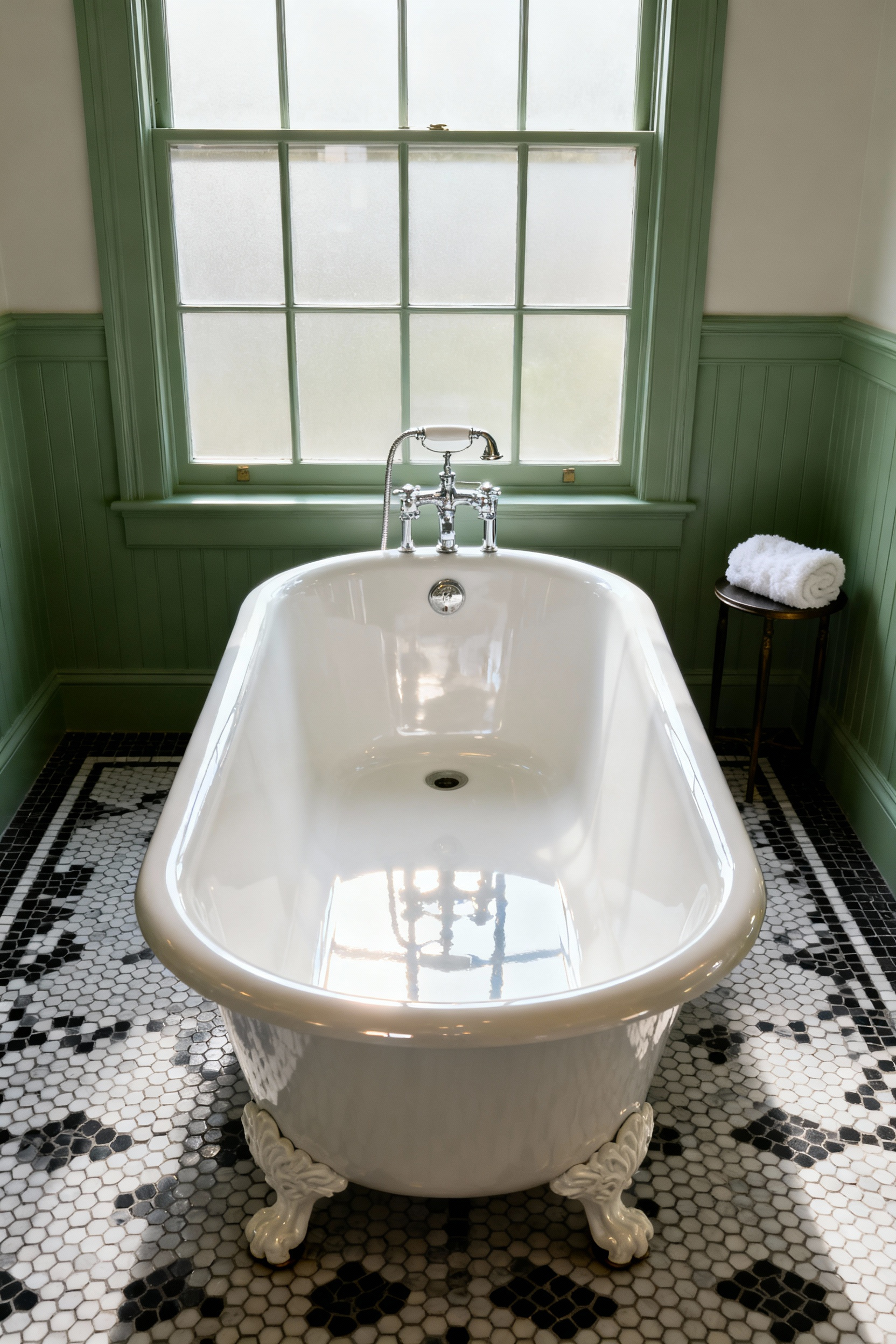
While it makes a grand statement, it requires careful planning. You need enough space to walk and clean all the way around it. From my professional experience restoring vintage pieces, an original cast iron tub is a fantastic find. It holds heat beautifully and has a substance that newer acrylic models just can’t match. Its presence alone elevates the simple act of bathing into a luxurious ritual.
13. Mastering the Mood: Layering Light with Heritage Fixtures
Lighting can make or break any room, and in a bathroom, it’s critical to get it right. The goal is to layer different types of light to create a space that’s both functional for tasks like shaving or applying makeup, and serene for a relaxing soak.
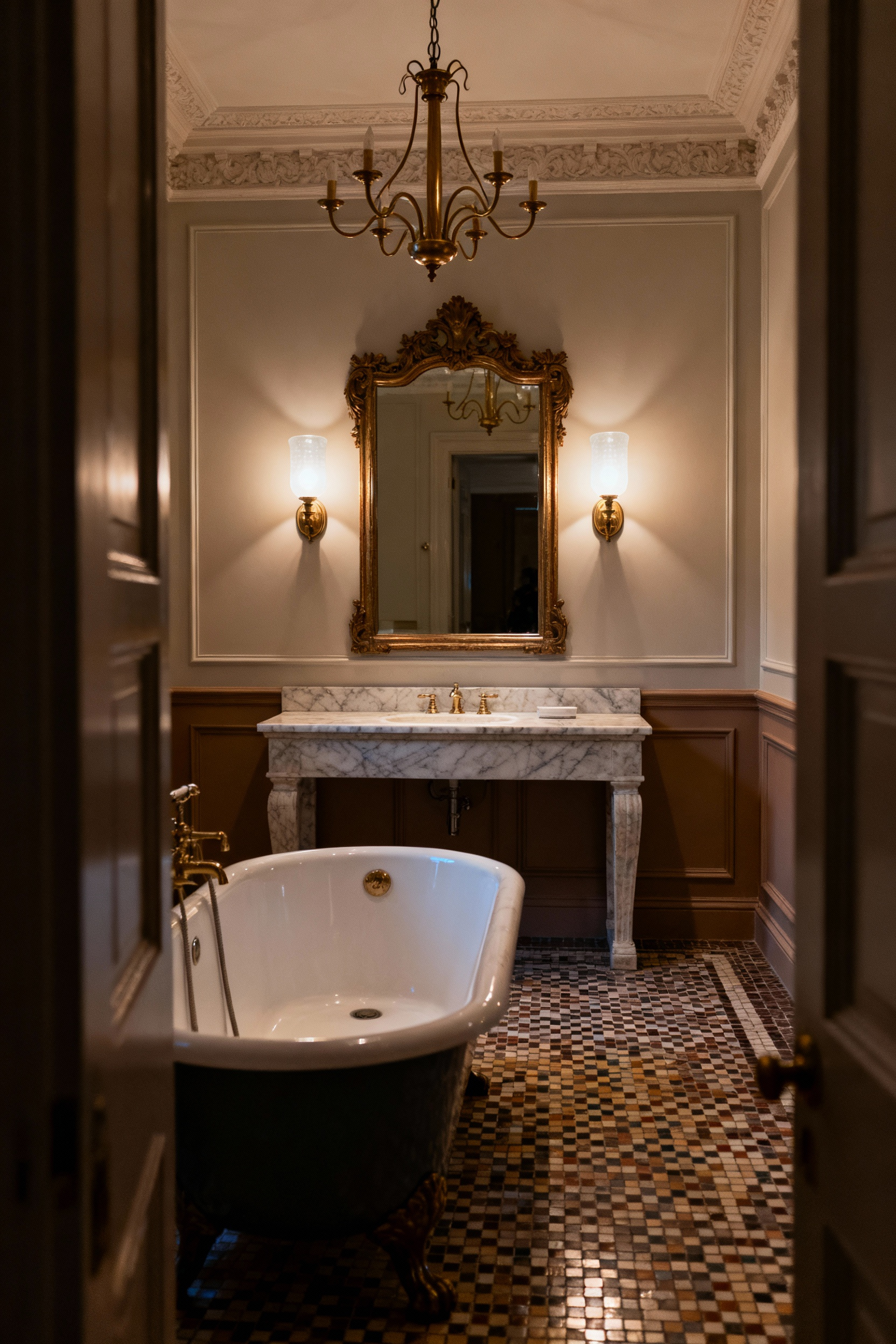
This usually means having bright, clear task lighting from sconces on either side of the mirror (the most flattering option!), paired with softer, ambient light from an overhead fixture like a chandelier or a beautiful flush mount. Choosing fixtures with historic character—made of aged brass or featuring etched glass shades—completes the picture and bathes the room in a warm, welcoming glow.
14. The Art of Disguise: Concealing Modern Conveniences
Just because you love a traditional look doesn’t mean you have to live in the past. Today’s best traditional bathrooms are masters of disguise, hiding all sorts of modern conveniences behind a classic facade.
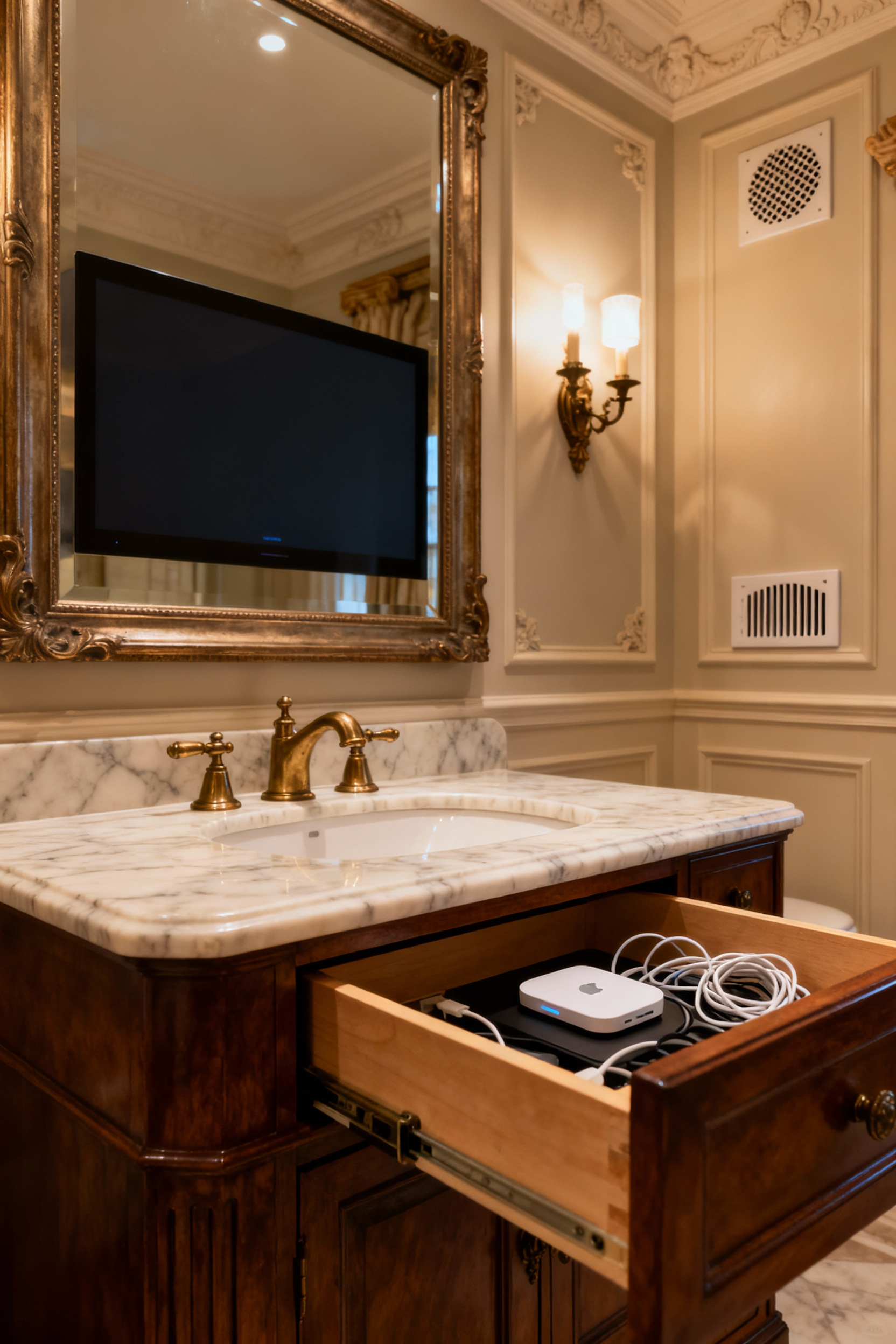
An outlet strip tucked inside a drawer, a television hidden behind the mirror, or a smart toilet with a classic silhouette are all ways to enjoy modern technology without disrupting the historical peace. I learned this when a client wanted integrated speakers; we managed to hide them so they were acoustically perfect but visually invisible. It’s about making technology serve the aesthetic, not the other way around.
Orchestrating Form and Function: Crafting the Traditional Layout with Precision (Part 2)
Beyond the layout of the primary fixtures, the soul of a traditional space is often found in its architectural flourishes. Here we explore how decorative details can define a room’s character, adding layers of history and craftsmanship that turn a simple box into a sophisticated retreat.
15. The Finishing Flourish: Employing Friezes, Cornices, and Plasterwork
This is what I call the “top and bottom” of a great traditional design. Architectural details like cornices, picture rails, and even ornate plaster medallions for a ceiling light are the elements that give a room its structure and grace. They’re like the beautiful frame around a masterpiece painting.
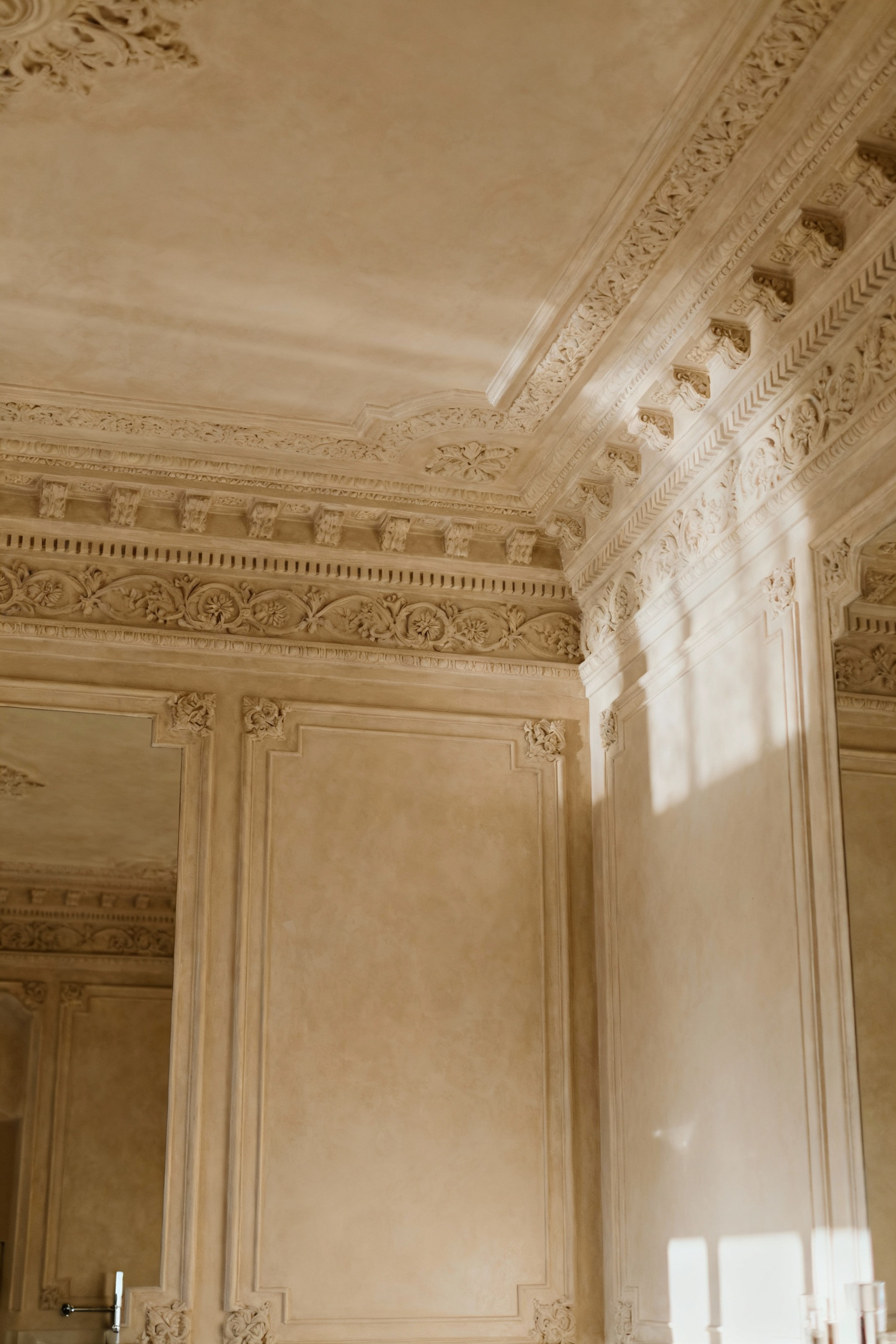
These details provide visual stopping points and create shadow lines that add depth and character to the walls and ceiling. Choosing a profile that’s appropriate for your home’s era—whether simple and clean or intricate and ornate—is a way to honor its architectural roots and make your new bathroom feel like it’s been there all along. It’s a level of finish that speaks to a deep appreciation for craftsmanship.
Elegance Endures: Blending Contemporary Life with Time-Honored Sensibility (Part 1)
The most successful traditional bathrooms aren’t museum pieces. They are living, breathing spaces that seamlessly weave today’s needs into a timeless backdrop. This section is about that delicate, beautiful balance.
16. Integrating Hydration: Smart Placement of Water Sources
In our wellness-focused world, having fresh, filtered water on hand is a daily luxury. But how do you add something as modern as a bottle filler to a traditional bathroom? The key is integration.
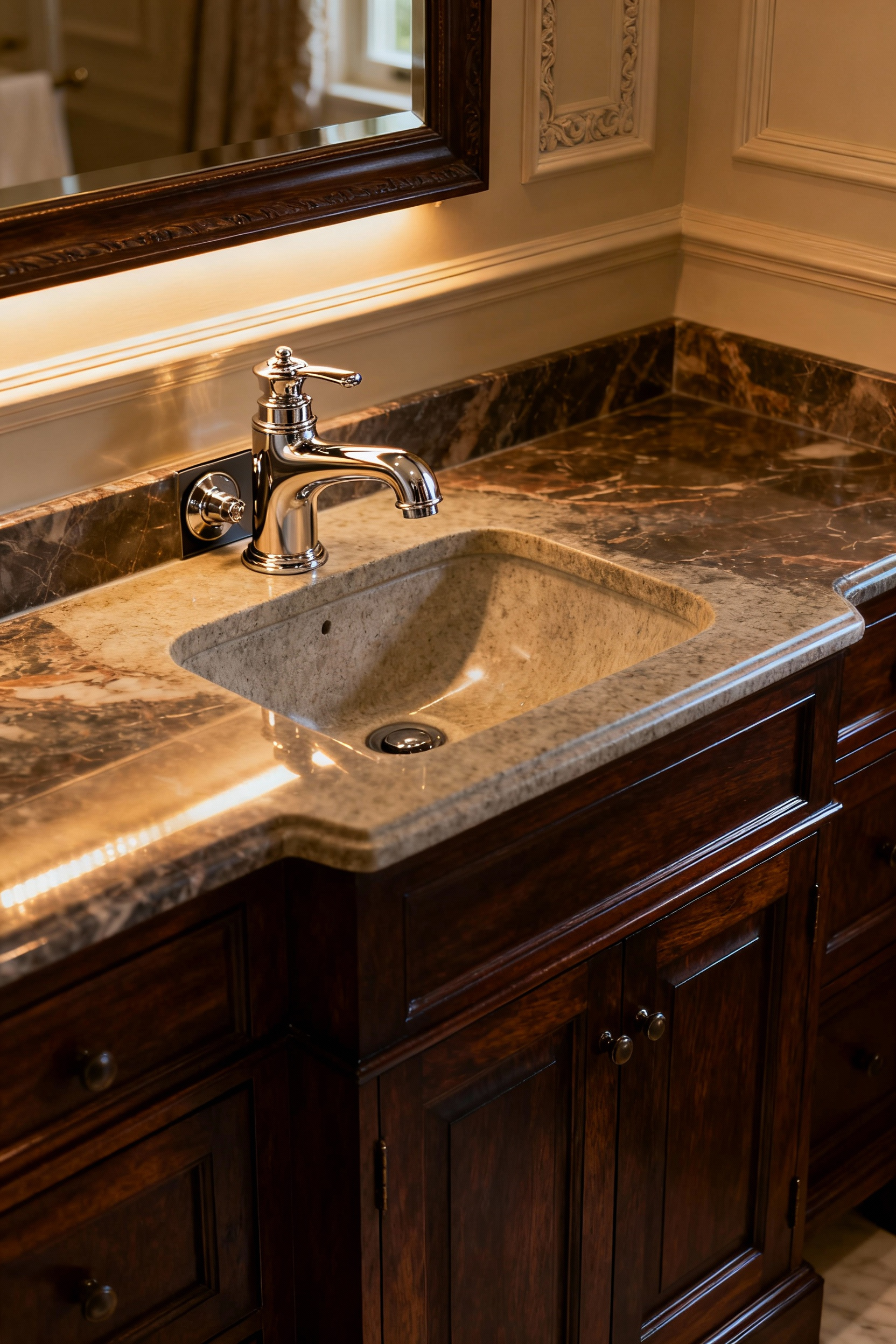
Instead of a bulky, obvious fixture, consider a small, discreet spout in a finish that matches your other taps, perhaps tucked into a custom niche in the wall or integrated seamlessly into the side of the vanity. The goal is to make this convenience feel like an organic part of the room, ready when you need it but practically invisible when you don’t.
17. An Ode to the Original: Restoring Historical Fixtures and Finishes
Before you tear everything out, take a moment to appreciate what might already be there. An original cast-iron tub, a beautiful old medicine cabinet, or a patch of charming mosaic tile could be the unique feature that makes your bathroom extraordinary. Preserving and restoring these elements is the ultimate act of sustainable design.
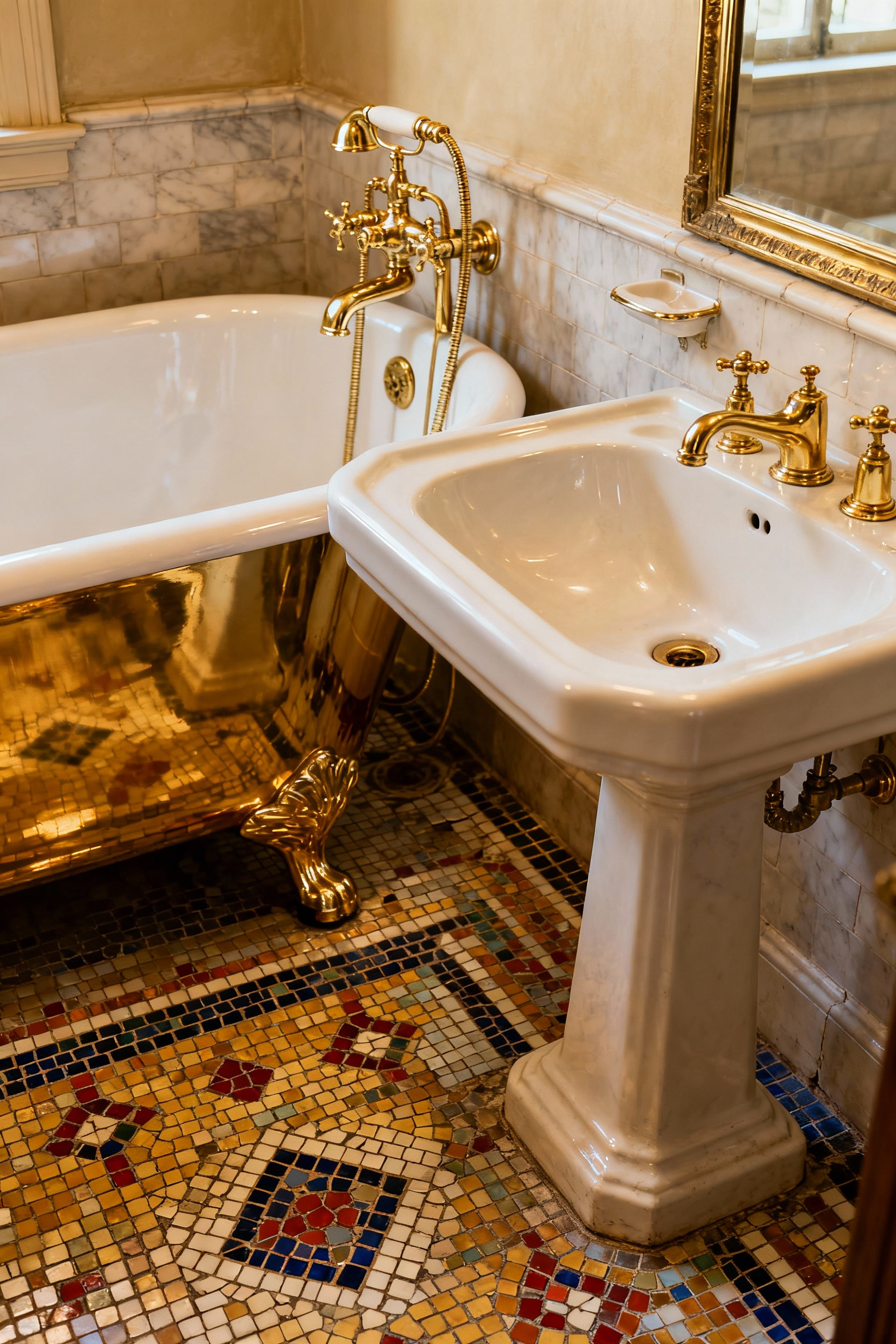
This work requires a gentle hand—re-glazing a tub, polishing old hardware, or carefully cleaning tile can breathe new life into pieces that have stood the test of time. Here’s what’s interesting: these restored elements bring a level of authenticity and character to your remodel that you simply cannot buy new. They carry the history of the home within them.
18. Beautifully Organized: Bespoke Storage That Enhances Design
Clutter is the enemy of serenity. In a traditional bathroom, storage should feel built-in and intentional, not like an afterthought. Bespoke solutions are your best friend here.
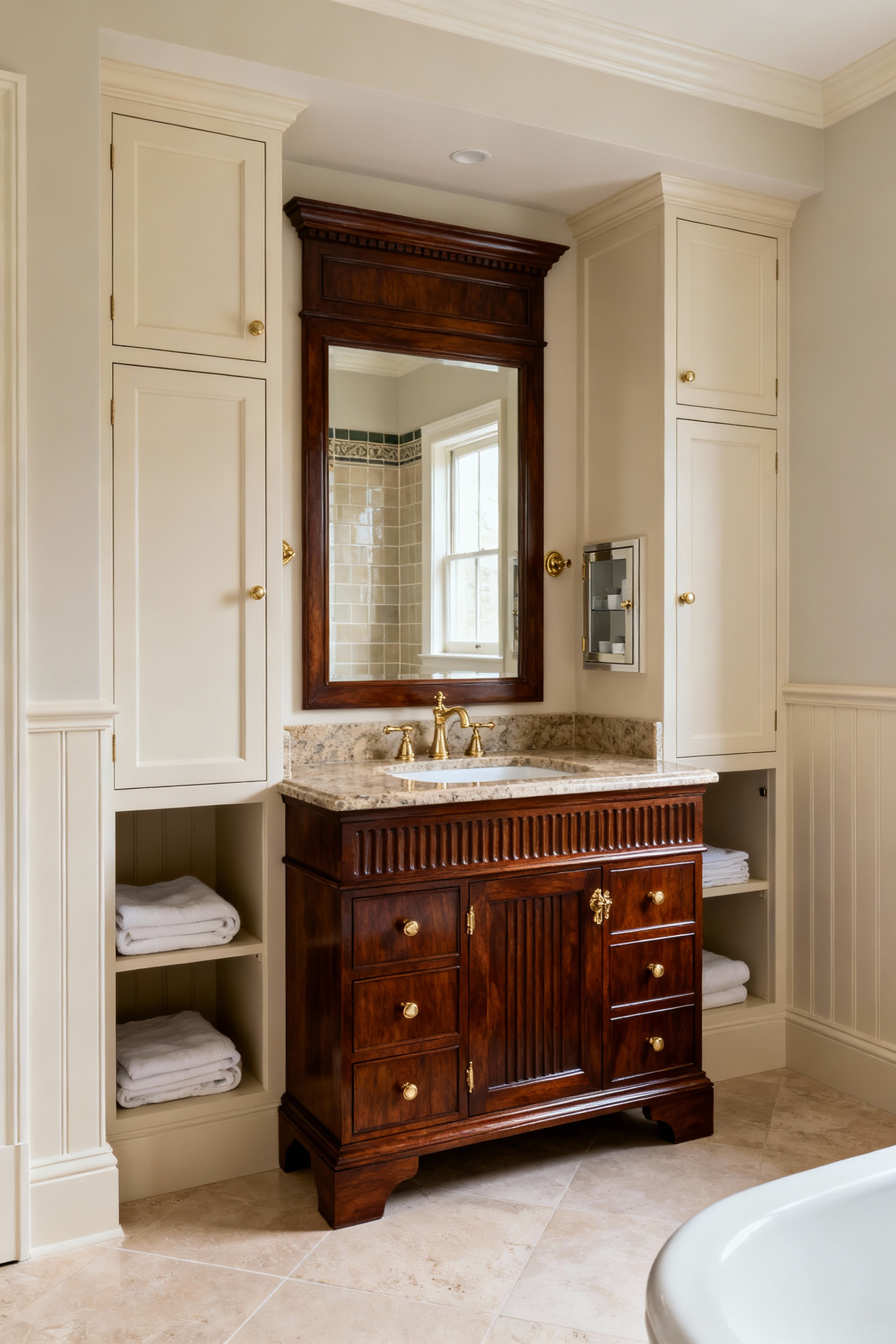
This could be a tall linen closet designed to look like an armoire, recessed niches in the shower wall lined with the same tile, or a custom vanity with drawers divided perfectly for your needs. When storage is integrated into the architecture of the room, it disappears beautifully, allowing the design to shine while keeping everything you need neatly at hand.
19. Smart, Not Obvious: Integrating Tech Without Compromise
Yes, you can have a smart home without sacrificing your traditional aesthetic. Technology becomes elegant when it’s invisible. Heated floors are a perfect example—a wonderful modern luxury with no visual footprint at all.
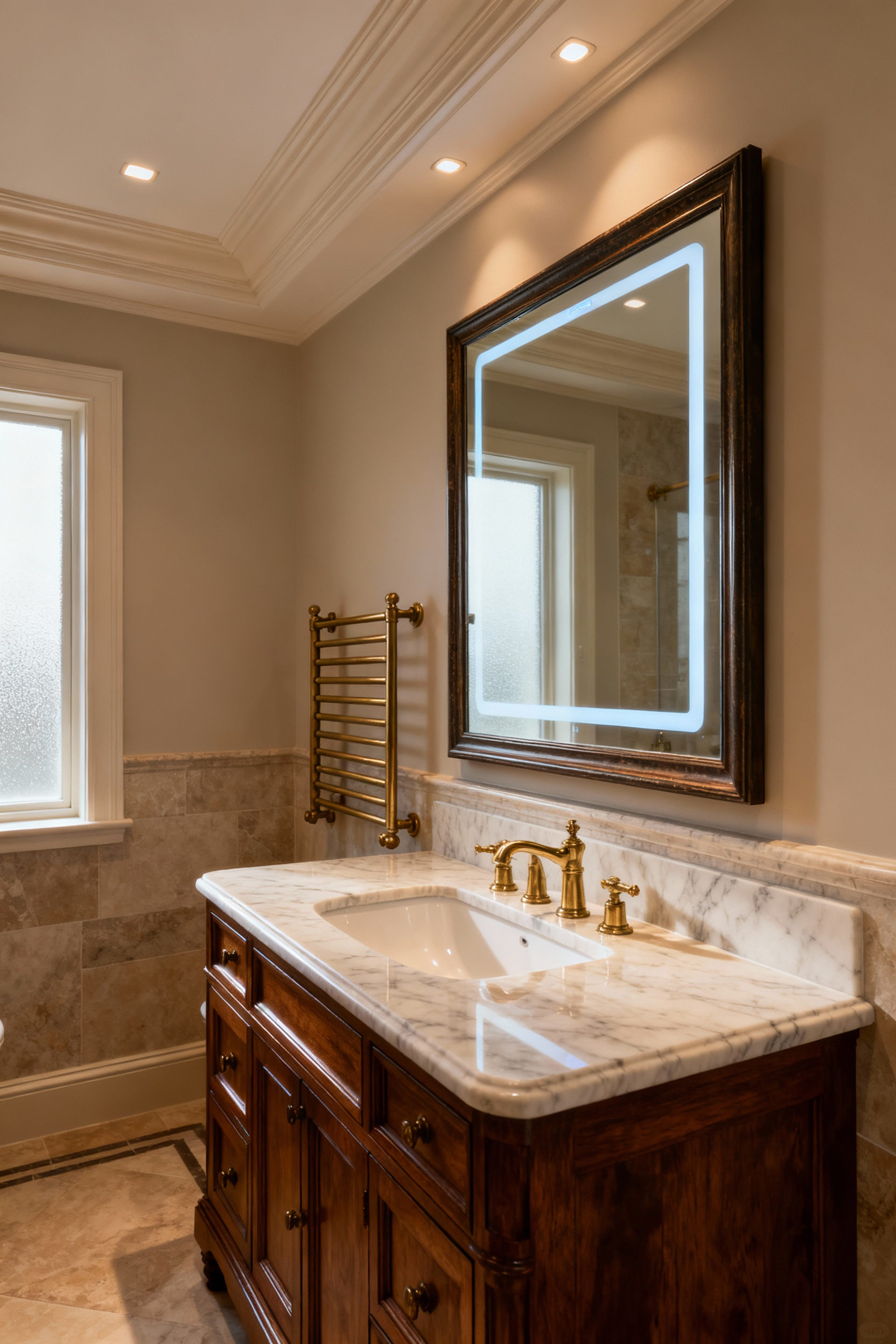
Think about light switches with classic toggle designs that are still smart-enabled, or a mirror that can de-fog with the touch of a button but is framed like a beautiful antique. Voice assistants can be hidden, and charging stations can live inside drawers. This allows you to enjoy all the ease of modern life while preserving the timeless peace of your sanctuary.
Elegance Endures: Blending Contemporary Life with Time-Honored Sensibility (Part 2)
At the heart of both sustainable and traditional design lies a single, powerful idea: longevity. It’s about making choices that are meant to last, creating spaces that only get better with time.
20. The Ultimate Sustainability: Specifying for Generations
This is the most important principle of all. The greenest choice you can make is to not have to remodel again in ten years. This means choosing classic designs that won’t look dated, using materials that are known for their durability, and insisting on quality construction.
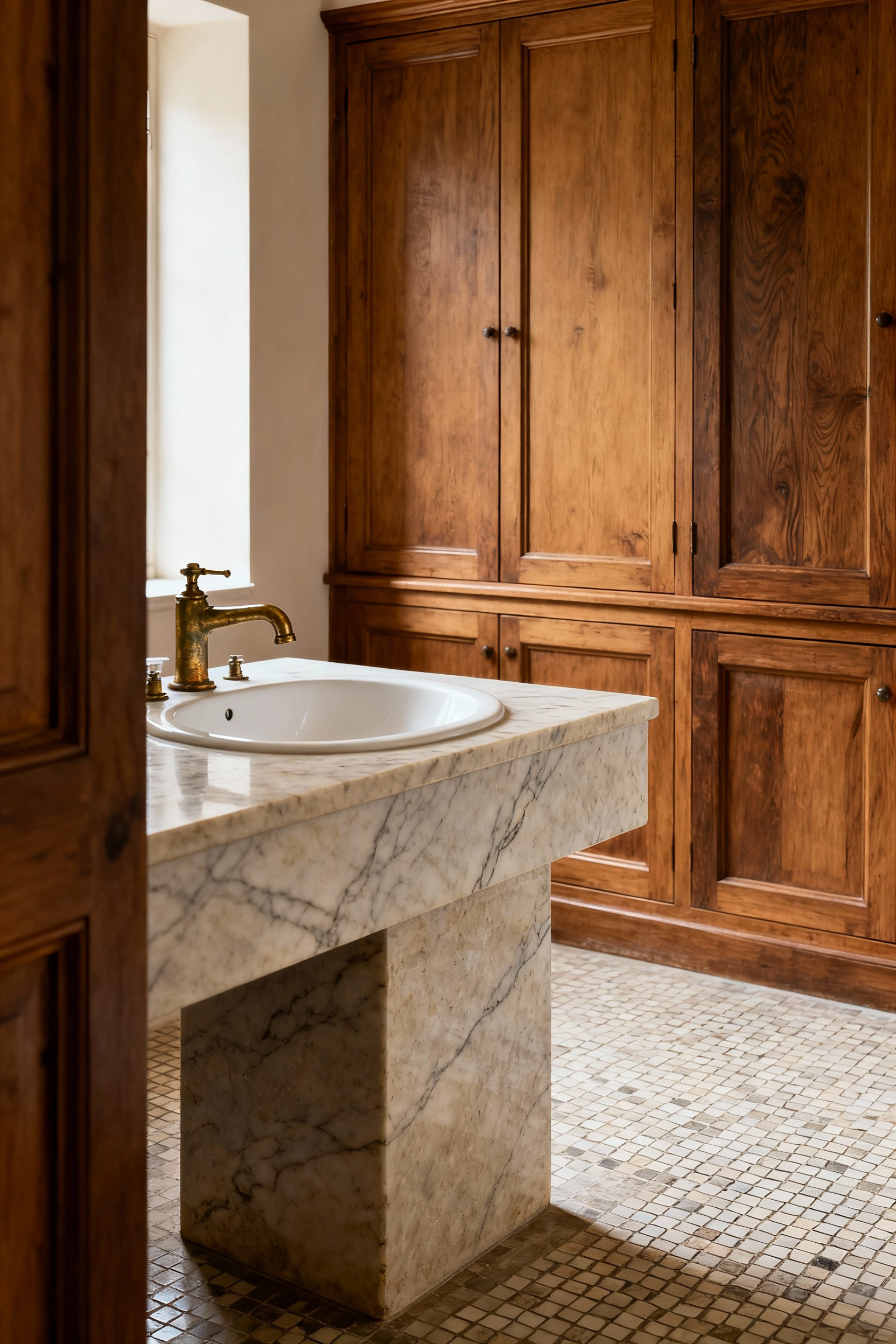
A bathroom built with natural stone, solid wood, and cast iron is an investment in the future of your home. These materials don’t just last; they acquire character, absorbing the small stories of daily life and becoming more beautiful for it. When you build with an eye toward forever, you create a legacy of quality and care—a truly sustainable sanctuary.
Conclusion
As we’ve journeyed through these principles, it’s become clear that a traditional bathroom remodel is so much more than a project—it’s an act of storytelling. It’s about creating a space that feels deeply connected to the past while perfectly serving the present. It’s where the sturdiness of a vintage find meets the quiet luxury of a heated floor.
The true magic happens when you weave together these threads of quality, history, and modern comfort. Let your home’s character be your guide, trust in materials that age gracefully, and don’t be afraid to give a forgotten piece a second chance. More than just a room, you’re crafting a personal haven—a space that will not only start and end your days in serene beauty but will also stand as a testament to the enduring power of thoughtful design for many years to come.